

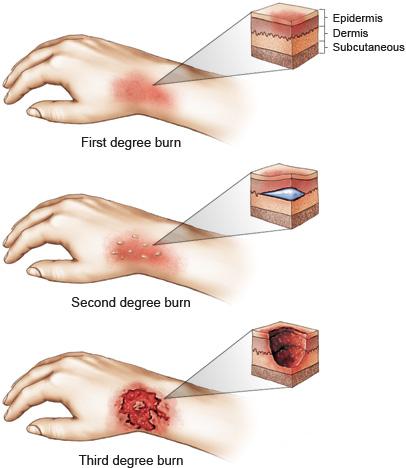
Life altering third degree burns
Third degree burns are truly life altering and most debilitating burn degrees among three major types of burn injuries. This directly penetrates all the skin layers and causes the huge damage to the skin of the victims. The better information we all can have about the third degree burns definition, we must gather because knowledge can reduce the probabilities of injuries took place.
Can you prevent third degree burns?
Indeed, following the preventive measures and wearing the safety gears all the time can prevent the accidents. However, one thing is inevitable that accidents are sudden and unpredictable so make sure that it only affects you with less intensity. Moreover, ensure you are safe and accident causes you not more damages.
Are third degree burns curable?
Indeed, it is curable and victim can be rehabilitated. However, in most of the severe injury cases of third-degree burns, victim couldnt able to survive or have to undergo the amputation process. The third degree burns recovery could be time taking. Therefore, it is highly recommended to rush for the doctors in case of 3rd degree burn cases.
How to identify third degree burns?
It is often difficult to identify or differentiate between a second degree burn and a third degree burn. People sometimes fail to differentiate between the two resulting in delayed medical assistance. It has been noted that medical reports of doctors highlight that delays in treatment of 3rd degree burns could cause major trouble to the victims.
Identifying 3rd degree burns.
These three points will help to differentiate between second degree and third degree burns.
- If the burn injury is not much painful then you have to be quick because it could be third degree burns. The reason of not pain is that all nerves have been damaged due to the burn effect so victim would not be able to feel any pain.
- If you find the white and black colour on the injured place instead of red, it tends to the third degree of burn
- Moreover, more visible symptoms of 3rd degree burns are when you assess the damages deeply and able to see bones and fat muscles of skin of deeper layer.
Is there a home remedy for third degree burns?
It is highly advised that you avoid home remedies in the case of third degree burn complications however there are some dos and donts for the 3rd degree burns that one can apply. Moreover first aid is advised to keep injury affect low until to get proper medical assistance. But one should not only depend on treating third degree burns at home.

Third Degree Burns – Dos and Donts
- Do not take out burned clothing unless it goes over effortlessly. Do make certain that the sufferer is free of charge of burning or smouldering materials as these will just make the burns worse.
- Make sure the individual is breathing. If the burn sufferer is not taking a breath, examine to see to it the respiratory tract levels and begin mouth-to-mouth resuscitation if essential. If the victim does not have a pulse, begin CPR.
- If the victim is taking a breath, cover the burn with a neat, damp sterile plaster or clean fabric. If the burnt area is large, a sheet is regularly the most effective choice.
- A victim’s fingers and toes need to be separated with dry, sterilized, non-adhesive bandages if they have been burned. This stops the hands from fusing.
- As important as it is to do the above, it is even much more essential not to do the following products. The here products will just make things even worse or make it harder for the sufferer to recover.
- Do not, under any circumstance, use any kind of type of ointment, butter, ice, medication, fluffy cotton suiting up, sticky bandages, cream, oil apply, or any type of home burn remedy to the burn site. All these obstruct the effective recuperation steps.